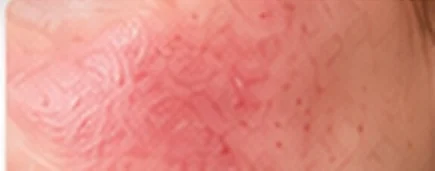
Flushing and persistent redness
Frequent or long-lasting redness, especially in the central face area.
Rosacea is a common, chronic inflammatory skin condition that mainly affects the face. It can cause persistent or recurrent redness, visible blood vessels, and sometimes small red bumps.
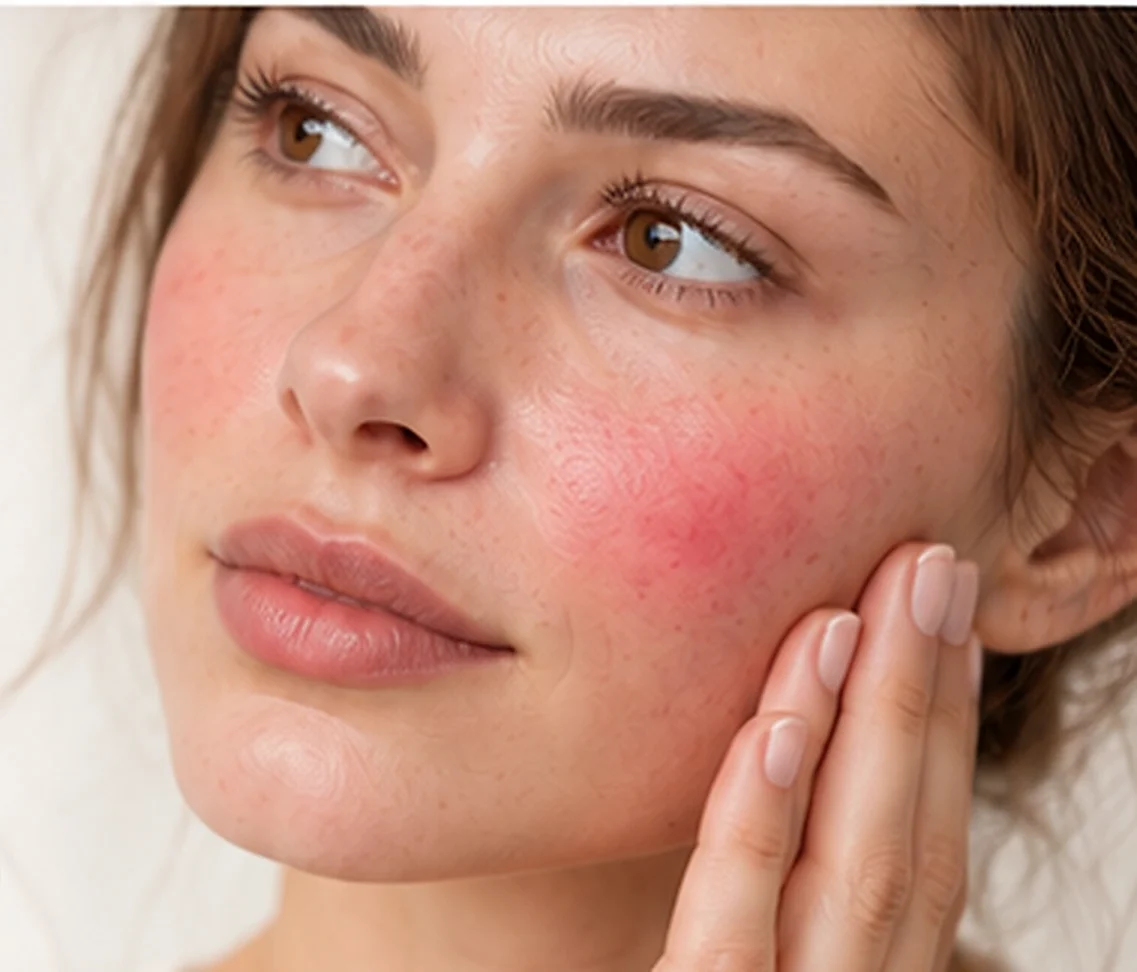
Rosacea is a long-term inflammatory condition that primarily affects the central areas of the face, such as the cheeks, nose, forehead and chin. It is characterized by episodes of redness, visible blood vessels and, in some cases, small red bumps or pus-filled spots.
The exact cause is not fully understood. A combination of factors, including genetic predisposition, an abnormal immune response, changes in blood vessels and environmental triggers, are believed to play a role.
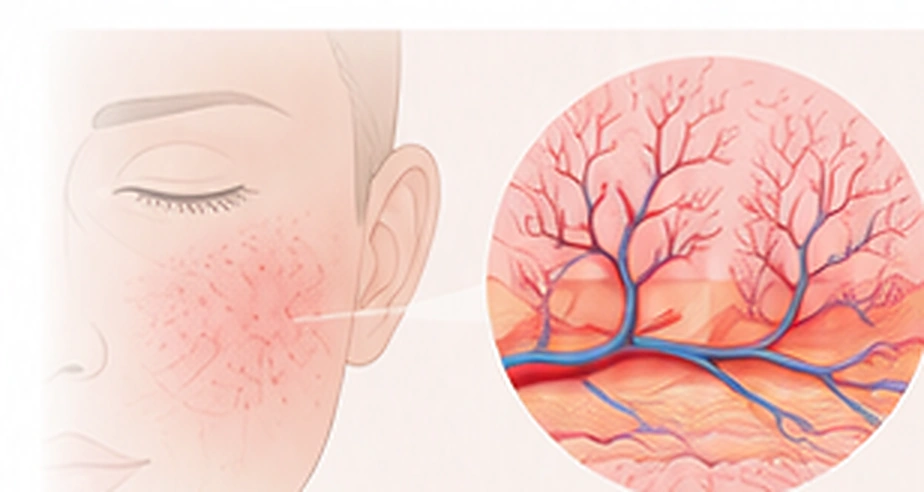
Rosacea symptoms can vary from mild to more pronounced and may include:
Frequent or long-lasting redness, especially in the central face area.
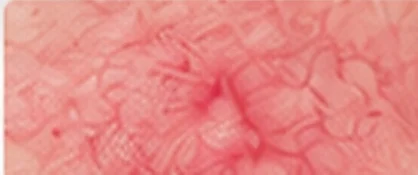
Small, dilated blood vessels (telangiectasia) may appear on the cheeks, nose and sometimes the chin.
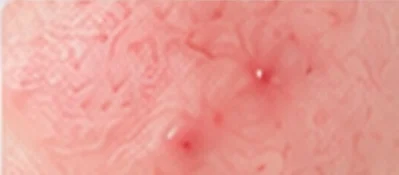
Inflammatory red bumps and sometimes pus-filled spots, which can resemble acne.
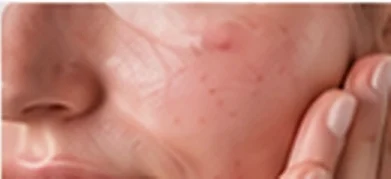
The skin may feel warm, tight, stinging or easily irritated. Symptoms often fluctuate, with periods of flare-ups and calmer phases.
Rosacea can be triggered or aggravated by various factors, which can differ from one person to another.
Sun exposure
and heat
Changes in
temperature
Spicy foods
and hot drinks
Alcohol
Emotional stress
and lack of sleep
Certain skincare
products
Rosacea and acne can look similar, but they are different conditions.
| Feature | Rosacea | Acne |
|---|---|---|
| Facial redness | Common | Not typical |
| Visible blood vessels | Common | Not typical |
| Papules and pustules | Common | Common |
| Blackheads and whiteheads | Not typical | Common |
| Main areas | Central face | Face, chest, back |
| Skin sensitivity | Common | Less common |
It is important to receive a proper medical assessment, as the management and skincare advice for rosacea and acne can be different.
Rosacea-prone skin is often more sensitive. A gentle skincare routine can help maintain the skin barrier and reduce the risk of flare-ups.
Choose mild, non-irritating products.
A suitable moisturizer can help support the skin barrier.
Daily use of a broad-spectrum sunscreen is recommended.
Some ingredients may irritate rosacea-prone skin.
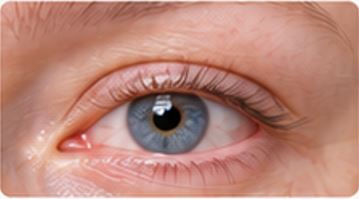
You should consult a doctor if you experience persistent facial redness, recurrent flare-ups, or if the condition is affecting your quality of life. Rosacea can also affect the eyes (ocular rosacea), causing dryness, irritation, redness and a gritty sensation.
A medical consultation can help confirm the diagnosis, identify triggering factors and provide appropriate advice.
No. Rosacea and acne can both cause red bumps and pustules, but they are different conditions. Rosacea often involves facial flushing, persistent redness and skin sensitivity, while blackheads and whiteheads are characteristic of acne. Both conditions can occur together.
Yes. Rosacea can affect all skin tones. In darker skin, redness may be less visible, while burning, stinging, sensitivity and acne-like bumps may be more noticeable. This can make rosacea harder to recognise and sometimes delay diagnosis.
Common triggers include sun exposure, hot weather, sudden temperature changes, hot drinks, spicy foods, alcohol, emotional stress and irritating skincare products. Triggers vary from person to person, so identifying your own is important.
Certain foods and drinks, particularly spicy foods, hot beverages and alcohol, may trigger flushing in some people. However, there is no single diet suitable for everyone with rosacea. Avoiding foods unnecessarily is not recommended; focus on identifying your personal triggers.
Skincare products do not usually cause rosacea itself, but unsuitable products can aggravate redness, burning and irritation. Harsh scrubs, strong exfoliants, fragrances and combining several active ingredients may damage the skin barrier. Gentle cleansing, moisturising and daily sun protection are important.
Yes. Ocular rosacea may cause dry, irritated or watery eyes, eyelid redness, a gritty sensation and sensitivity to light. Eye pain, blurred vision or significant light sensitivity require prompt medical assessment.
Consult a doctor if you experience persistent facial redness, repeated flushing, unexplained inflammatory bumps or ongoing skin sensitivity. Early assessment can help distinguish rosacea from other skin conditions and prevent inappropriate skincare practices.
For patients who wish to learn more about rosacea, the following professional organisations provide reliable medical information.
External educational resources. These links do not replace a medical consultation.