01
Pain or Discomfort
Discomfort at the back of the mouth may be associated with an erupting wisdom tooth, inflammation or another dental issue that requires examination.
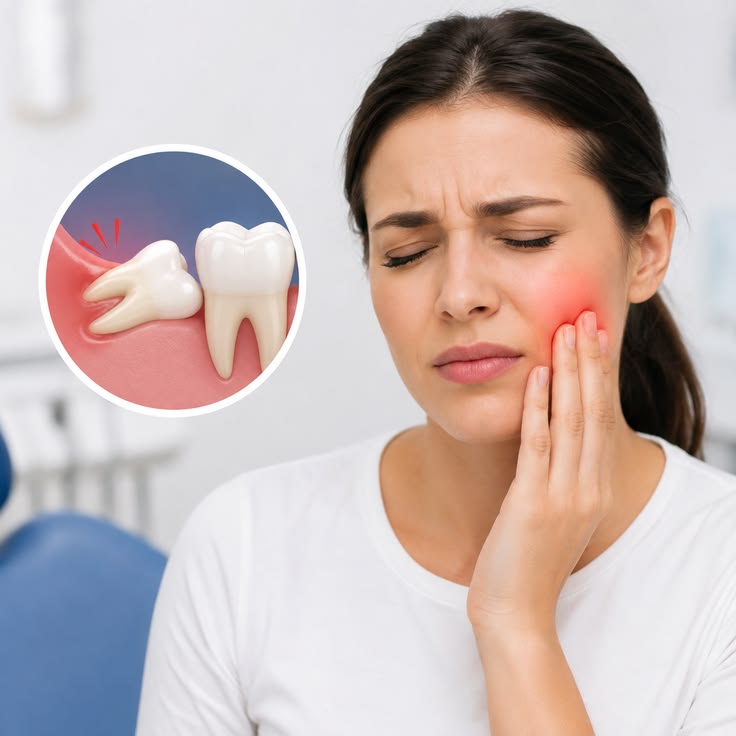
Wisdom teeth do not always need to be removed. However, when a wisdom tooth causes pain, swelling, repeated gum inflammation or other dental concerns, a dental examination can help determine whether removal may be appropriate.
A wisdom tooth may need attention when it cannot emerge properly or contributes to ongoing dental problems. Your dentist will assess the tooth before recommending treatment.
Discomfort at the back of the mouth may be associated with an erupting wisdom tooth, inflammation or another dental issue that requires examination.
Partially erupted wisdom teeth can create areas where food and bacteria collect, sometimes leading to gum inflammation or infection.
A wisdom tooth may remain trapped beneath the gum or grow at an angle. Examination and imaging, when indicated, help assess its position.
Decay, damage to a neighbouring tooth or recurrent inflammation may influence whether removal is recommended.
The process depends on whether the tooth has erupted, its position and the complexity of the case.
Your dentist reviews your symptoms, examines the affected area and discusses your dental history.
Dental X-rays may be recommended to assess the tooth's position and surrounding structures.
Your dentist explains the available options, expected recovery and relevant risks before treatment.
If removal is performed, you receive instructions tailored to the procedure and your recovery.
The decision should be based on symptoms, examination findings, imaging when indicated and your dentist's clinical judgement.
Recovery varies according to the position of the tooth and whether the extraction is straightforward or surgical. Some soreness, swelling and difficulty opening the mouth can occur during the initial recovery period.
Your dental team will provide instructions based on your procedure. General guidance may include:
Contact your dental team if pain or swelling becomes significantly worse, bleeding does not settle or you develop other concerning symptoms. Seek urgent care for difficulty breathing or swallowing.
As with any dental extraction, wisdom tooth removal can involve risks. These may include bleeding, swelling, infection, dry socket and temporary difficulty opening the mouth. Depending on the tooth's position, there may also be a risk of injury to nearby structures, including nerves.
Your dentist will explain the risks relevant to your situation and whether referral or additional assessment may be appropriate.
The next step begins with understanding your symptoms and assessing your dental health. Your dentist can explain whether monitoring, treatment or wisdom tooth removal is appropriate for you.
The recommended approach depends on your clinical findings, the position of the tooth and your individual dental needs.
Helpful answers to common questions about wisdom tooth assessment, extraction and recovery.
No. Wisdom teeth that are healthy, properly positioned and easy to keep clean may not need removal. Your dentist can advise based on your examination and any necessary imaging.
Yes. A partially erupted wisdom tooth can create an area where food and bacteria collect, sometimes contributing to gum inflammation, an unpleasant taste or bad breath. Other causes are also possible, so an examination is important.
Local anaesthesia is generally used during extraction to minimise pain. You may feel pressure during the procedure and some discomfort as the area heals. Your dentist can explain the options suitable for your case.
Recovery differs from person to person and depends on the complexity of the extraction. Initial discomfort and swelling often improve over several days, although complete healing can take longer.
Soft foods are often easier to manage while the area is tender. Your dentist may recommend avoiding hard, crunchy, very hot or chewy foods during the initial healing period.
Some temporary jaw stiffness can occur after extraction, particularly after a more complex procedure. Contact your dentist if it worsens, persists or is accompanied by other concerning symptoms.
Impacted wisdom teeth can sometimes be removed, but the appropriate approach depends on their position and proximity to surrounding structures. Your dentist will assess the case and discuss whether referral is needed.
Contact Medrose Medical Center to arrange a dental consultation. The dentist will assess your symptoms and explain the options appropriate for your dental needs. Contact the clinic →
If you have pain, swelling or concerns about an impacted wisdom tooth, a dental assessment can help clarify the cause and the next steps. Contact Medrose Medical Center in Al Barsha Heights (Tecom), Dubai, to arrange a visit.