
Fungal Nail Infections
in Dubai
A yellow, thickened or damaged nail is not always caused by fungus. Understanding the cause helps guide appropriate medical care.
Book a Consultation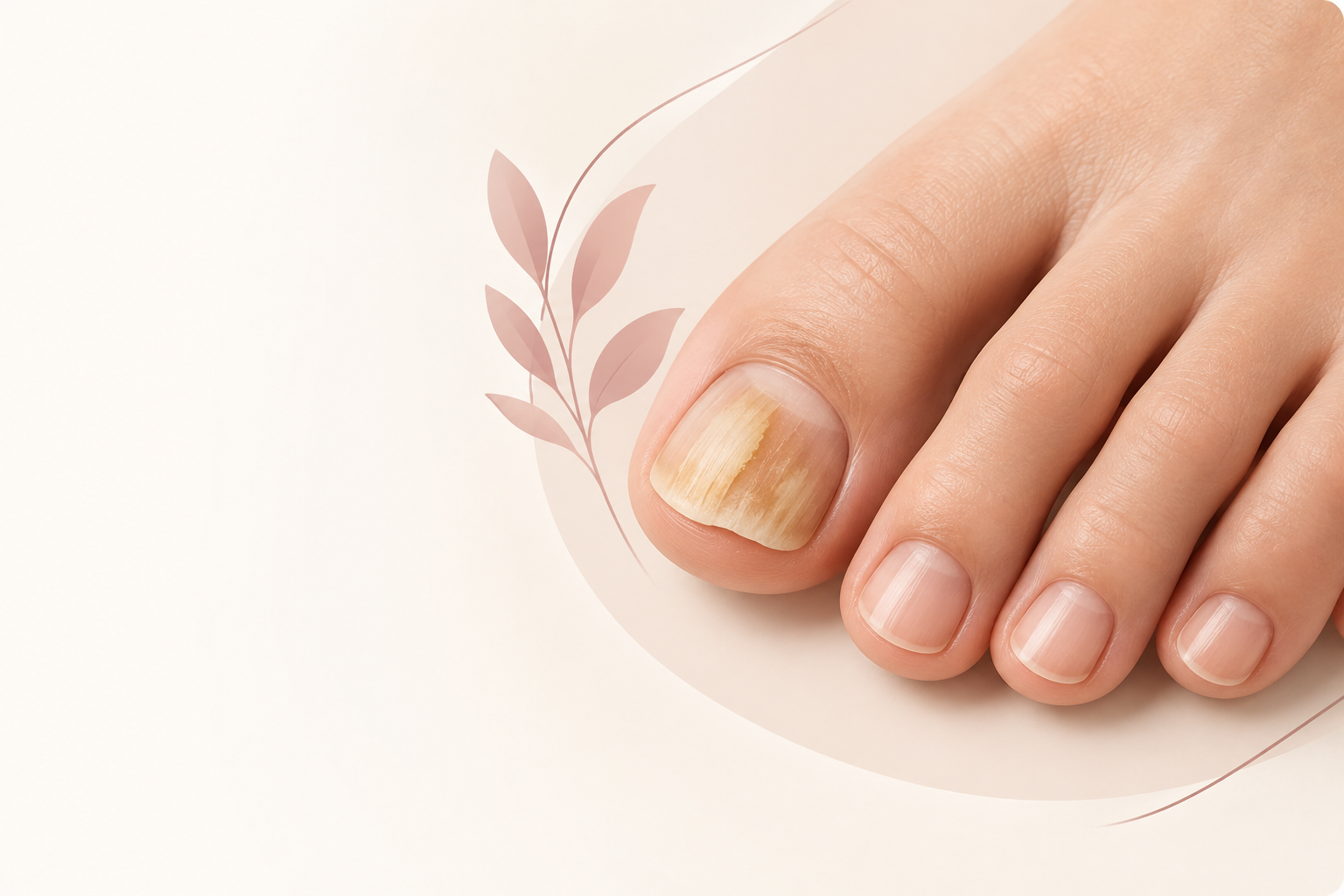
What is a fungal nail infection?
Fungal nail infection, also called onychomycosis, occurs when fungi infect part of the nail unit. Toenails are affected more often than fingernails. Dermatophytes are the most common cause, although certain yeasts and non-dermatophyte moulds can also be involved.
Infection may begin at the outer edge of a nail and gradually spread. The nail can change colour, thicken, become fragile or separate from the nail bed. Some infections cause little discomfort, while others make nail trimming or wearing shoes uncomfortable.
One important distinction
Changes in nail colour or thickness do not establish a fungal diagnosis. Psoriasis, repeated trauma and other nail disorders may look similar. An examination and, where appropriate, nail testing help avoid unnecessary antifungal treatment.
What might you notice?
The appearance varies according to the nail involved and the extent of the condition.
Discolouration
White, yellow or brown patches or streaks.
Thickening
A nail that becomes harder to trim or uneven.
Fragility
Crumbling, roughness or brittle nail edges.
Separation
Part of the nail lifting away from the underlying skin.
Why does nail fungus develop?
Fungi thrive in environments that are warm and moist. Nail infection may follow a fungal skin infection, particularly athlete’s foot. Several factors can increase susceptibility:
- Repeated exposure to communal wet floors, such as changing rooms
- Footwear that retains moisture and persistent sweaty feet
- Minor nail injury or repeated pressure from shoes
- Increasing age or slow nail growth
- Diabetes, impaired circulation or reduced immune defences
Having a risk factor does not mean that a nail change is necessarily fungal.
Not every abnormal nail is infected
Nail psoriasis, eczema affecting the nail folds, trauma, and other nail disorders can resemble onychomycosis. A new dark streak, pigment extending onto surrounding skin, or a rapidly changing single nail deserves medical assessment rather than presumed antifungal treatment.
How is the diagnosis made?
01 · Clinical examination
The doctor examines the affected nails and surrounding skin, considers other possible causes and reviews relevant medical history and medications.
02 · Nail testing when indicated
A nail clipping or sample of material beneath the nail may be examined using microscopy, fungal culture, or other appropriate laboratory methods. Confirmation is especially important before systemic antifungal therapy.
What treatment may involve
The choice depends on diagnostic findings, the number of nails affected, the extent of involvement, medical history and potential medication interactions.
Topical antifungal treatment
Medicated nail preparations may be considered for selected mild or limited infections. They require consistent application over an extended period, and not every type of nail involvement responds adequately.
Oral antifungal treatment
Tablets may be considered for more extensive or persistent disease. The doctor evaluates contraindications, interactions and whether laboratory monitoring is appropriate before prescribing.
Treatment does not immediately restore the appearance of a damaged nail. Clearing of the infection and replacement by healthy nail growth are different processes. A severely altered nail may also need supportive nail care.
Why does the nail take so long to look normal?
Fingernails and toenails grow slowly, especially toenails. Even when treatment successfully controls the infection, the discoloured or thickened portion generally has to grow out. A fingernail may take around six months to replace, while a toenail may take 12–18 months, sometimes longer.
Improvement should be judged over time, and recurrence remains possible.
When to seek medical advice promptly
Arrange assessment if a nail becomes painful, red, swollen or produces discharge; if you have diabetes or impaired immunity; or if a dark streak or other unusual nail change develops. Do not attempt to remove the nail yourself.
Small habits that help reduce risk
Keep dry
Dry feet carefully, including between the toes.
Protect feet
Wear sandals in communal showers and changing rooms.
Avoid sharing
Keep nail clippers, files, towels and footwear personal.
Address skin fungus
Seek care for athlete’s foot, which can contribute to reinfection.
Frequently asked questions
Is every yellow or thickened nail a fungal infection?
No. Repeated pressure from footwear, nail psoriasis, trauma and other conditions can produce similar changes. Examination and sometimes a nail sample help identify the cause.
Can a fungal nail infection spread?
Yes. Fungi may spread to other nails or surrounding skin, and can sometimes pass between people through shared nail tools or contaminated communal surfaces. Good foot hygiene and not sharing personal items help reduce the risk.
Do I need a laboratory test before treatment?
Testing is particularly useful when the diagnosis is uncertain or oral antifungal medication is being considered. A nail clipping or sample from beneath the nail may be sent for laboratory examination.
Can nail fungus be treated without tablets?
Some mild infections may be suitable for topical antifungal preparations. More extensive disease often responds better to oral medication, when medically appropriate. The decision depends on nail involvement and the patient's medical history.
How long does it take for a fungal nail to look normal again?
Even after the infection is controlled, the affected nail must grow out. Fingernails often take about six months to replace; toenails may take 12–18 months or longer. Some nails do not return completely to their previous appearance.
Can fungal nail infections come back?
Yes. Reinfection can occur, especially when athlete’s foot persists or feet are repeatedly exposed to warm, damp conditions. Keeping feet dry, managing skin infections and avoiding shared nail tools may help reduce recurrence.
Concerned about a change in your nails?
A medical consultation can help clarify the possible cause and whether testing or treatment is appropriate.
Request a ConsultationAl Barsha Heights (Tecom), Dubai