Medrose Medical Center | Barsha Heights, Tecom

PRP Treatment

PRP Treatment in Dubai

For Hair & Skin

Platelet-Rich Plasma (PRP) is a treatment prepared from your own blood. It is used in dermatology and aesthetic medicine for selected types of hair loss and to support skin quality and tissue regeneration.

♡ Your own blood
No donor blood
♢ Medical approach
Individual assessment
♙ Hair & skin indications
Tailored to your needs
PRP treatment for hair and skin in Dubai at Medrose Medical Center

What Is PRP?

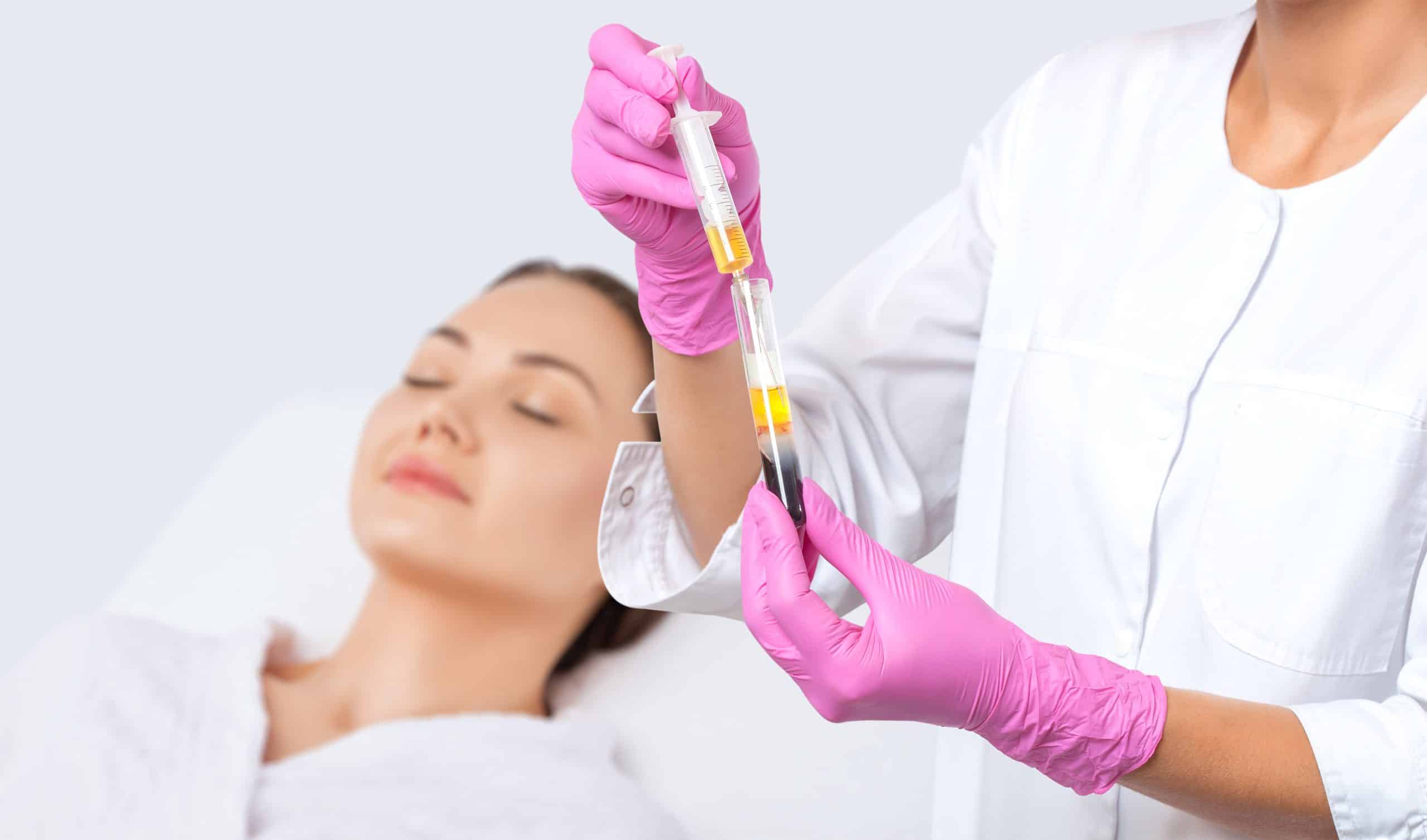
PRP stands for Platelet-Rich Plasma. Blood contains red blood cells, white blood cells, plasma and platelets. Platelets are best known for their role in blood clotting, but they also contain and release signalling proteins and growth factors involved in the body's natural healing and tissue-repair processes.

To prepare PRP, a small amount of your blood is collected and processed by centrifugation to separate its components. The platelet-rich fraction is then used for treatment.

PRP comes from your own blood No donor blood is used.
A Treatment with Medical Roots

PRP is not a new concept. Platelet concentrates were first developed in transfusion medicine in the 1970s. Over subsequent decades, their use expanded into surgery, dentistry, orthopaedics and wound management as interest grew in the role of platelets and their growth factors in tissue repair.

Today, PRP is used in several medical fields, including dermatology and aesthetic medicine, with protocols adapted according to the condition being treated.

How Does PRP Work?

When platelets become activated, they release signalling molecules and growth factors involved in cell communication, tissue repair and remodelling. PRP aims to deliver a concentrated preparation of platelets to the treatment area.

For the skin, these signals may support collagen production and tissue remodelling, which can help improve skin quality and texture.

For the scalp, PRP may support the activity of existing hair follicles and is mainly considered for selected forms of hair loss.

The PRP Process

1
Blood collection
2
Centrifugation
3
Platelet-rich plasma
4
Treatment area
5
Biological response
Important: PRP does not create new hair follicles. Response depends on the cause and stage of hair loss, the condition of existing follicles and individual biological response.

PRP for Hair Loss

Hair loss has many possible causes. PRP has been studied most extensively in androgenetic alopecia (male- or female-pattern hair loss). In selected patients, it may help support existing hair follicles and improve measures such as hair density or thickness.

Before recommending PRP, the pattern of hair loss, scalp condition, medical history and possible underlying causes should be assessed. Additional investigations may be appropriate when clinically indicated.

More about PRP for Hair →

PRP for Skin

PRP may be used as part of a treatment plan aimed at supporting skin quality and tissue remodelling. Depending on the indication and assessment, it may be considered for:

  • Skin texture and quality
  • Fine lines
  • Selected acne-scar treatment plans
  • Areas showing early signs of skin ageing
  • Supporting tissue repair in selected indications
More about PRP for Skin →

What Can Influence PRP Results?

The final PRP preparation can vary according to the blood collected, centrifugation method, platelet concentration and treatment protocol.

Age, health, underlying condition, severity of hair loss or skin concern and individual biological response can also influence the outcome.

What Happens During a Session?

A small amount of blood is collected, similarly to a routine blood test.

The blood is processed to obtain the platelet-rich fraction, which is then administered to the treatment area.

Mild redness, tenderness, swelling or small bruises may occur temporarily after treatment.

How Many Sessions Will I Need?

There is no single PRP protocol suitable for every patient. For hair loss, an initial series of sessions is commonly used, followed by reassessment.

For skin indications, the number and interval of sessions depend on the concern being treated and whether PRP is used alone or as part of a combined plan.

Frequently Asked Questions

What is PRP treatment?

PRP stands for Platelet-Rich Plasma. It is prepared from a small sample of your own blood, which is processed to obtain a platelet-rich fraction that is then used in the treatment area.

How does PRP work?

Platelets release growth factors and signalling molecules involved in tissue repair and remodelling. PRP aims to concentrate these platelets in the treatment area to support these natural biological processes.

Does PRP help with hair loss?

PRP may help selected patients with hair loss, particularly androgenetic hair loss (male- or female-pattern hair loss). The cause of hair loss should be assessed first, as PRP is not appropriate for every type of alopecia.

Can PRP regrow hair in completely bald areas?

PRP acts on existing hair follicles; it does not create new follicles. It is therefore more relevant where follicles are still present but the hair is thinning.

How many PRP sessions are usually needed for hair?

An initial course of around 3 sessions is commonly used, often spaced about one month apart. Additional or maintenance sessions may be considered according to the degree of hair loss and individual response.

What can PRP do for the face?

PRP may support collagen production, tissue remodelling and gradual improvement in skin quality and texture. The expected improvement varies according to the skin condition, age and individual response.

How many PRP sessions are usually needed for the face?

A course of approximately 3 sessions is commonly considered, although some patients may need fewer or additional sessions depending on the indication and treatment plan.

Is PRP painful?

Some discomfort may be felt during treatment, particularly with injections. The intensity varies according to the treatment area, technique and individual sensitivity.

Is there downtime after PRP?

Mild redness, tenderness, swelling or occasional bruising may occur after PRP. These effects are usually temporary, and many patients return to their usual activities shortly afterwards.

When will I see results from PRP?

Results are gradual rather than immediate. For skin, changes may become noticeable over the following weeks. For hair, improvement generally takes longer and is usually assessed over several months.

Who may not be suitable for PRP?

PRP may not be appropriate in certain situations, including some blood or platelet disorders, active infection or particular medical conditions. Medical history should be reviewed before treatment.

Where can I have PRP treatment in Dubai?

PRP for selected hair and skin indications is available at Medrose Medical Center in Al Barsha Heights (Tecom), Dubai. An assessment helps determine whether PRP is appropriate and what treatment plan may be considered.

Medrose Medical Center in Al Barsha Heights Dubai

PRP Treatment in Al Barsha Heights, Dubai

Medrose Medical Center provides PRP treatment for selected hair and skin indications in Al Barsha Heights (Tecom), Dubai. The treatment indication, suitability and proposed protocol are discussed following individual assessment.

✎
Medical Content Reviewed by Dr Nadjia Gueorgour
This page is for educational purposes and provides general information about PRP treatment. Individual assessment is required to determine suitability and the most appropriate treatment plan.