
Medrose Medical Center | Barsha Heights, Tecom

Chemical Peel Treatment

Chemical Peel in Dubai

Controlled skin resurfacing, selected according to your skin and concern.

Chemical peeling uses carefully selected acids to create controlled exfoliation of the skin. The type and depth of the peel should be chosen according to the skin condition, treatment goal and individual response.

●
Medrose Medical Center
Al Barsha Heights (Tecom), Dubai
Chemical peel treatment in Dubai at Medrose Medical Center
Chemical peeling and skin resurfacing

A treatment with a long history

The concept of using natural substances to improve the skin surface goes back thousands of years. Ancient Egyptian medical texts describe early skin treatments, and sour milk was traditionally used on the skin. Today, we know that sour milk contains lactic acid, an alpha- hydroxy acid (AHA). Modern chemical peeling has developed into a controlled medical procedure using standardized peeling agents.
What is a Chemical Peel?

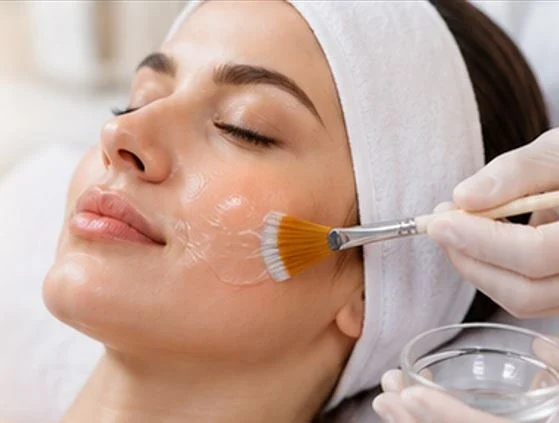
A chemical peel, also called chemexfoliation, involves appiying a selected chemical solution to the skin to produce controlled exfoliation and subsequent renewal.
Depending on the agent and depth used, chemical peels may help improve acne, post-acne marks, uneven pigmentation, rough texture, dull-looking skin and selected signs of photoageing,

The aim is not simply to make the skin "peel." A good treatment begins by deciding what needs to be treated and how deeply the skin needs to be affected.

How does a Chemical Peel work?

♢

1. Application

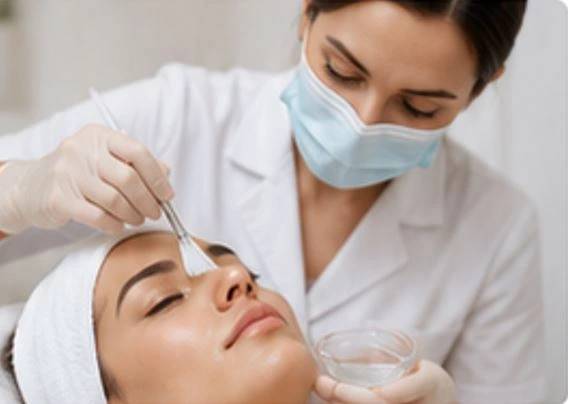
A selected peeling agent is applied to the prepared skin.

≋

2. Controlled exfoliation

The solution produces a controlled effect at a planned depth in the skin.

✧

3. Renewal

As treated layers recover, epidermal renewal occurs and skin texture may improve.

Not all Chemical Peels are the same

AHA

AHA Alpha-hydroxy acids

Examples include glycolic and lactic acid. Depending on formulation and concentration, they may be selected for texture, dullness or uneven pigmentation.

BHA

BHA Beta-hydroxy acid

Salicylic acid is commonly used in acne-prone and oily skin because of its keratolytic properties.

TCA

TCA Trichloroacetic acid

TCA can be used at different strengths and depths and requires appropriate patient selection and professional application.

⚗
The name of the acid alone does not tell you how strong a peel will be.

The clinical effect depends on several factors, including the peeling agent, concentration, pH, formulation, application technique, number of layers or contact time, skin preparation and individual response.

What can Chemical Peels be used for?

◯

Acne-Prone Skin

Selected peel types may complement an acne treatment plan.

✧

Post-Acne Marks

May help improve some superficial post-inflammatory colour changes.

☼

Uneven Pigmentation

Selected peels may help improve uneven skin tone and superficial pigmentation.

✣

Rough Texture

Controlled exfoliation may improve surface texture.

◒

Dull-Looking Skin

Removal of accumulated superficial cells may give the skin a fresher appearance.

≋

Photoaging

Certain peels may be considered for selected signs of sun-related skin change.

Chemical peel skin assessment at Medrose Medical Center

Which Chemical Peel is right for my skin?

There is no single peel that is appropriate for everyone. Before selecting a chemical peel, we consider:

✓
Your skin type and colour
✓
Previous treatments
✓
The concern being treated
✓
Current skincare and medications
✓
Current skin condition
✓
History of pigmentation or scarring
✓
Sensitivity and skin barrier
✓
Expected downtime
At Medrose, the peel is selected after a skin assessment rather than choosing a treatment only by its commercial name.

What happens during a Chemical Peel?

☷
01

Skin assessment

The skin and treatment concern are assessed and relevant history is reviewed.

◯
02

Preparation

The skin is cleansed and prepared. Some patients may require a pre-peel skincare plan.

♢
03

Application

The selected peeling solution is applied while the skin response is observed.

◷
04

Completion

The peel is removed, neutralized or allowed to self-neutralize according to the product protocol.

▱
05

Aftercare

Appropriate skincare and sun-protection instructions are provided.

What should I expect after a peel?

The response depends on the type and depth of peel. A superficial peel may cause temporary redness, dryness, tightness or light flaking. More intensive peels can produce more visible peeling and require longer recovery.

You do not need dramatic peeling for a treatment to have an effect. The amount of visible flaking is not a reliable measure of whether a peel worked.

After your Chemical Peel

♢

Moisturise
as advised

☼

Use sun
protection

♧

Do not pick
peeling skin

▱

Pause irritating
actives when advised

When should a Chemical Peel be postponed?

A chemical peel may not be appropriate when the skin is actively irritated, inflamed, infected or damaged. Other factors can include relevant medications, recent procedures, tendency to scar, previous isotretinoin use and a history of recurrent cold sores. Assessment matters because sometimes the safest choice is to treat the underlying skin problem first and peel later.

Considering a Chemical Peel?

The first step is understanding what you want to improve and whether chemical peeling is appropriate for your skin.

●
Medrose Medical Center
Al Barsha Heights (Tecom), Dubai
Medical content reviewed by Dr. Nadjia Guergour

Frequently Asked Questions

Common questions about chemical peel treatment, treatment selection, recovery and expected downtime.

1 Which chemical peel is best for my skin?

There is no single peel that is best for everyone. The choice depends on your skin type, concern, current skin condition, previous treatments, medications and expected downtime.

2 How many sessions will I need?

The number of sessions depends on the concern, selected peel and individual skin response. A treatment plan is determined after assessment.

3 Will my skin peel after the treatment?

Peeling varies according to the type and depth of treatment. Some superficial treatments produce little visible flaking.

4 Is a chemical peel painful?

Sensations vary according to the peel. Some patients experience warmth, tingling or temporary stinging during application.

5 Can chemical peels help acne?

Selected chemical peels may complement an acne treatment plan. The appropriate peel depends on your current skin condition and treatment goals.

6 Can chemical peels remove acne scars?

Certain superficial marks and texture concerns may improve with selected peels. Deeper scars may require another or combined treatment approach.

7 Can chemical peels help pigmentation?

Selected peels may help improve some forms of superficial pigmentation and uneven skin tone.

8 Can darker skin tones have chemical peels?

Chemical peels can be considered for different skin tones, but treatment selection and technique should be appropriate for the individual.

9 How long is the downtime?

Downtime depends on the type and depth of peel. Superficial treatments generally have less visible downtime than deeper treatments.

10 Can I wear makeup after a chemical peel?

This depends on the treatment and your skin's condition afterwards. Your clinician will advise when makeup can safely be resumed.