01
Cleaning
Our dentist cleans the tooth surface and prepares it for sealant application.
Medrose Medical Center | Barsha Heights, Tecom

Fissure sealants are thin protective coatings applied to the grooves of back teeth to help prevent tooth decay in these areas. They are commonly considered for children and teenagers and may also benefit selected adults.
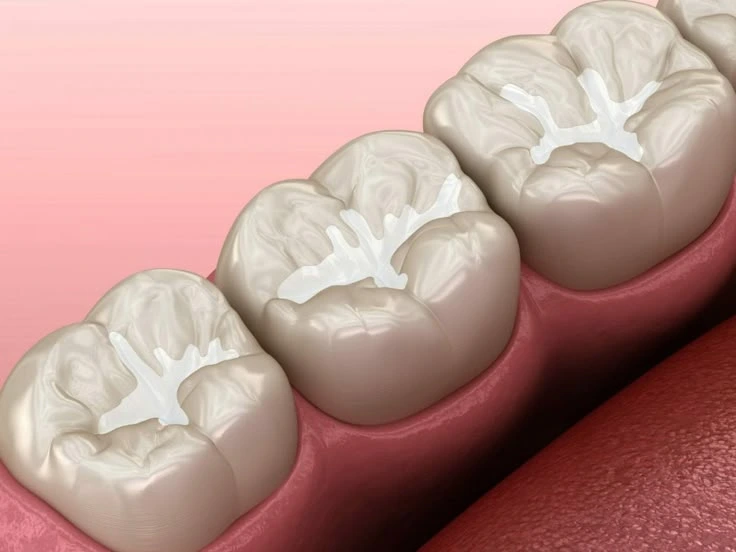
The procedure is usually quick and comfortable. The tooth is cleaned and dried before the sealant is placed into its grooves and hardened. In most cases, an injection is not needed.
Our dentist cleans the tooth surface and prepares it for sealant application.
The tooth is kept dry. A conditioning solution may be used to help the sealant bond.
The liquid sealant is placed into the pits and grooves of the tooth.
A special light may be used to harden the material. Our dentist then checks the sealant and bite.
Suitability
Sealants are often considered for children and teenagers when their permanent molars erupt. Adults with suitable back teeth may also benefit, depending on tooth condition and individual risk of decay.
The Reasons
The grooves of molars and premolars can trap food and plaque. A sealant creates a protective barrier over suitable areas, helping reduce the risk of decay in those grooves.
Find answers to common questions about fissure sealants, including how they work, who may benefit and what to expect.
Fissure sealants are thin protective coatings applied to the pits and grooves of back teeth. They help prevent food and plaque from collecting in these areas, reducing the risk of tooth decay.
Fissure sealants are widely used in preventive dentistry and are generally considered safe when appropriately selected and applied. Our dentist will assess the tooth and discuss relevant considerations before treatment.
Sealants can last for several years, but their lifespan varies. Our dentist will check them during routine visits and recommend repair or replacement if they become worn or damaged.
Applying fissure sealants is usually painless and does not normally require an injection. The tooth is cleaned, prepared and coated with sealant. Our dentist will explain each step and help you feel comfortable during the visit.
Sealants are commonly recommended for children and teenagers as their permanent molars erupt. Some adults may also benefit if their teeth have suitable grooves and their risk of decay supports treatment. Our dentist will assess each case individually.
Yes. Adults may benefit when suitable tooth surfaces are present and a sealant is clinically appropriate. The decision depends on the condition of the tooth, existing restorations and the individual's risk of decay.
Problems are uncommon. Occasionally, a sealant may wear, chip or feel slightly high when biting, and it may need adjustment or repair. Contact the clinic if your bite feels uncomfortable after treatment.
A sealant can wear or become partially detached without obvious symptoms. Routine dental check-ups allow our dentist to inspect it and determine whether it needs repair or replacement. Continue brushing with fluoride toothpaste and attending regular check-ups.
Protect Your Smile
Our dentist can assess your teeth and explain whether fissure sealants are suitable for you or your child.